


No Tail Docking
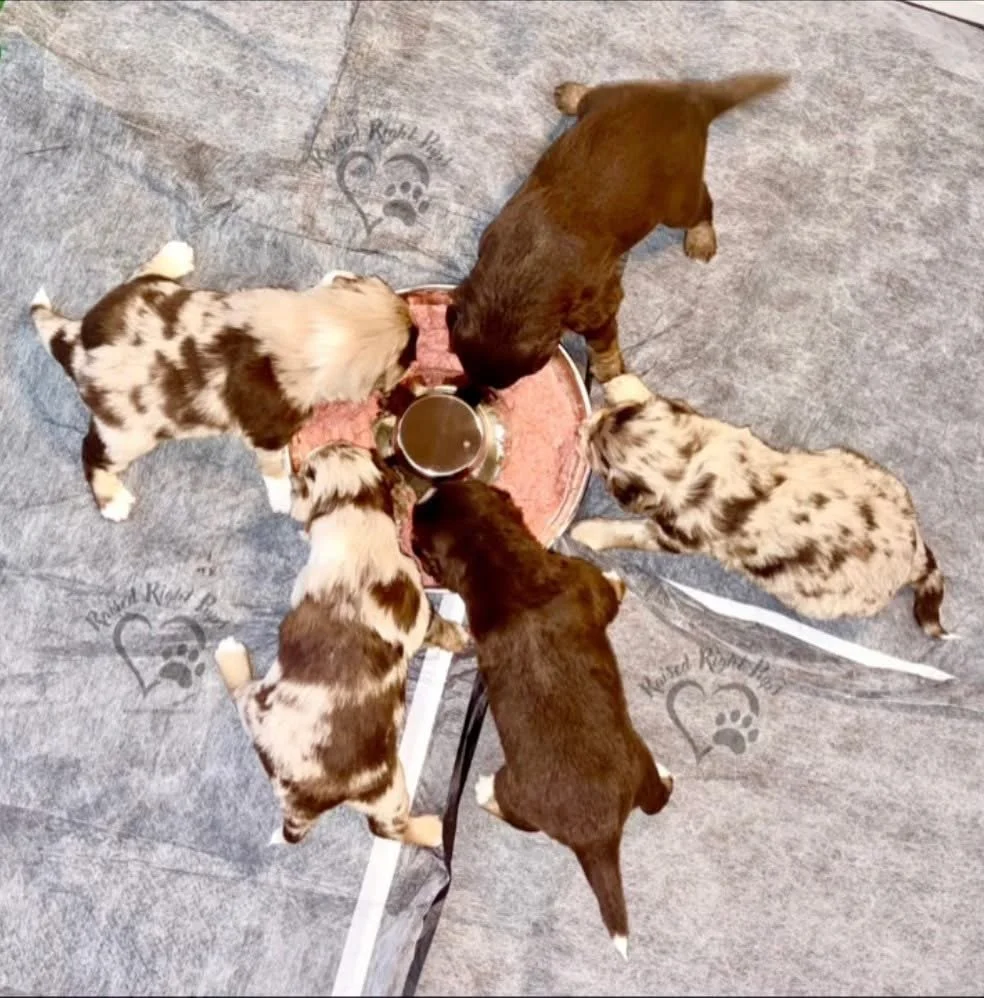
No Tail Docking
We wanted to explain why we do not dock, the science behind natural tails, and how it affects body alignment and movement. Aussies use their tails as a counterbalance when they are turning, herding, working, running, and even learning new movements as puppies. It is part of their structure, part of their confidence, and part of who they are.
A tail is part of their spine. It contains bone, nerves, and muscles, and they use it every single day for balance, expression, and communication. When you hear a tiny puppy scream from having a part of their body cut off with scissors, you will never want to dock another tail as long as you live. There is nothing natural or healthy about it, and it is completely avoidable.
Aussies were created with these beautiful full tails for a reason, and we will always protect them. I will never understand how any breeder or vet can bring themselves to cut them off. They often say, “it’s just cartilage, they can’t feel it.” Umm no! It would be like cutting off a newborn baby’s finger at birth with no anesthetic. The nerves are fully developed at birth and there is zero pain control before and after the trauma. Therefore, a puppy feels lingering soreness, burning, and inflammation for days.
Let’s compare my example - Medically and anatomically, both are amputations of a healthy body part done for cosmetic or traditional reasons, not medical necessity. So the ethical comparison is absolutely accurate.
However, if we want to be precise:
• A tail is made of multiple vertebrae, nerves, muscles, and is part of the spine.
• An ear is primarily cartilage, nerves, and skin, so the tissue type is different.
• But in both cases, you are removing a fully functional, healthy body part from a newborn.
An Australian Shepherd’s tail is not just cute, it is a major part of how they communicate, how they show emotion, and how they balance their entire body. Their tail is their expression, and you can read so much about an aussie just by watching it. In fact, aussies with natural tails are often faster, cleaner in their movement, and more capable in sports and agility than docked aussies. This is why many performance handlers prefer natural tails, because it allows the dog to use its full structure the way it was designed.
If you have questions about natural tails or would like to learn more, feel free to message me anytime or leave a comment on our Facebook page. Many of our Aussie families are also happy to share their experiences, photos, and videos so you can see firsthand just how naturally these dogs live, move, and communicate with their full tails.
We truly love when new owners take a genuine interest in understanding the breed they are welcoming into their home. Many of our families had never owned an Australian Shepherd before, and they quickly discover how brilliant, emotional, intuitive, and deeply connected these dogs are to their people. Welcoming education, open discussion, and even the harder conversations about breed practices helps owners build stronger communication, better training relationships, and deeper empathy with their dogs.
We have placed Aussies with natural tails into active homes, companion homes, and working farm environments, and every one of them thrives exactly as they were designed. Not a single family has ever wished their dog’s tail had been removed. In fact, many specifically chose our program because we preserve natural tails and cannot imagine their dog any other way.
This breed is perfect as it is, balanced, expressive, capable, and whole. Our hope is that continued education helps more families make informed decisions, advocate for their dogs, and appreciate the Australian Shepherd’s natural structure and function. As awareness grows, meaningful change within breed standards becomes possible.
Knowledge is power, and our dogs rely on us to advocate for their wellbeing. Thank you to the families who have joined us on this journey, asked questions, supported education, and helped protect what makes this incredible breed so special. Real change happens one informed and compassionate owner at a time.
Resources:
American Veterinary Medical Association (AVMA), Welfare Implications of Tail Docking of Dogs
Canadian Veterinary Medical Association (CVMA), Position Statement on Cosmetic Tail Docking
British Veterinary Association (BVA), Policy on Tail Docking
Royal College of Veterinary Surgeons (RCVS), Tail Docking Guidance
World Small Animal Veterinary Association (WSAVA), Animal Welfare Guidelines
American Animal Hospital Association (AAHA), Canine Pain Management Guidelines
Australian Veterinary Association (AVA), Tail Docking Position Statement
European Convention for the Protection of Pet Animals (Council of Europe)
Diesel, Pfeiffer & Brodbelt (2010), Risk Factors for Tail Injuries in Dogs, Veterinary Record
Wansbrough (1996), Cosmetic Tail Docking of Dogs, Australian Veterinary Journal
Noonan et al. (1996), Behavioral Observations of Puppies Undergoing Tail Docking, Applied Animal Behaviour Science
Bennett & Perini (2003), Tail Docking in Dogs, Veterinary Nursing Journal